Beyond Big Money: Why I Still Believe in The People’s Portugal
4 min read
If you spend ten minutes browsing Portuguese real estate portals, reading market reports, or attending property seminars, a single narrative dominates: yield, ROI, Golden Visa funds, and high-density eco-tourism.
Every hill seems to be calculated by its potential for boutique glamping. Every historic stone cottage is framed as a short-term rental waiting to happen. The entire industry has organised itself around capital returns, institutional funds, and international developers looking for fast exits.
In the middle of this high-stakes game, a massive group of buyers has been quieted and pushed aside: the dreamers.
The young couples, creatives, remote professionals, and families who do not want to build a hotel empire; they just want to build a life. They want space. They want a piece of land surrounded by cork oaks and pine trees. They want to roll up their sleeves, take a century-old ruin, and turn it into a sanctuary.
When my partner Sofia and I started looking at properties in Portugal, we felt that friction firsthand. We saw how the system was rigged to favor deep pockets and commercial balance sheets, leaving ordinary people with a vision feeling overwhelmed, outpriced, and ignored.
That is why I got into real estate. Not to facilitate corporate land grabs, but to act as a bridge: a champion for the people who want to reclaim the authentic, slower, and deeply personal soul of Portugal.
Call it a movement. I call it The People’s Portugal.
Walking 12.5 Hectares: A Tale of Two Visions
A few weeks ago, I went to view a property just off Portugal’s iconic N2 highway: the famous route winding through the spine of the country from Chaves in the north down to Faro in the south.
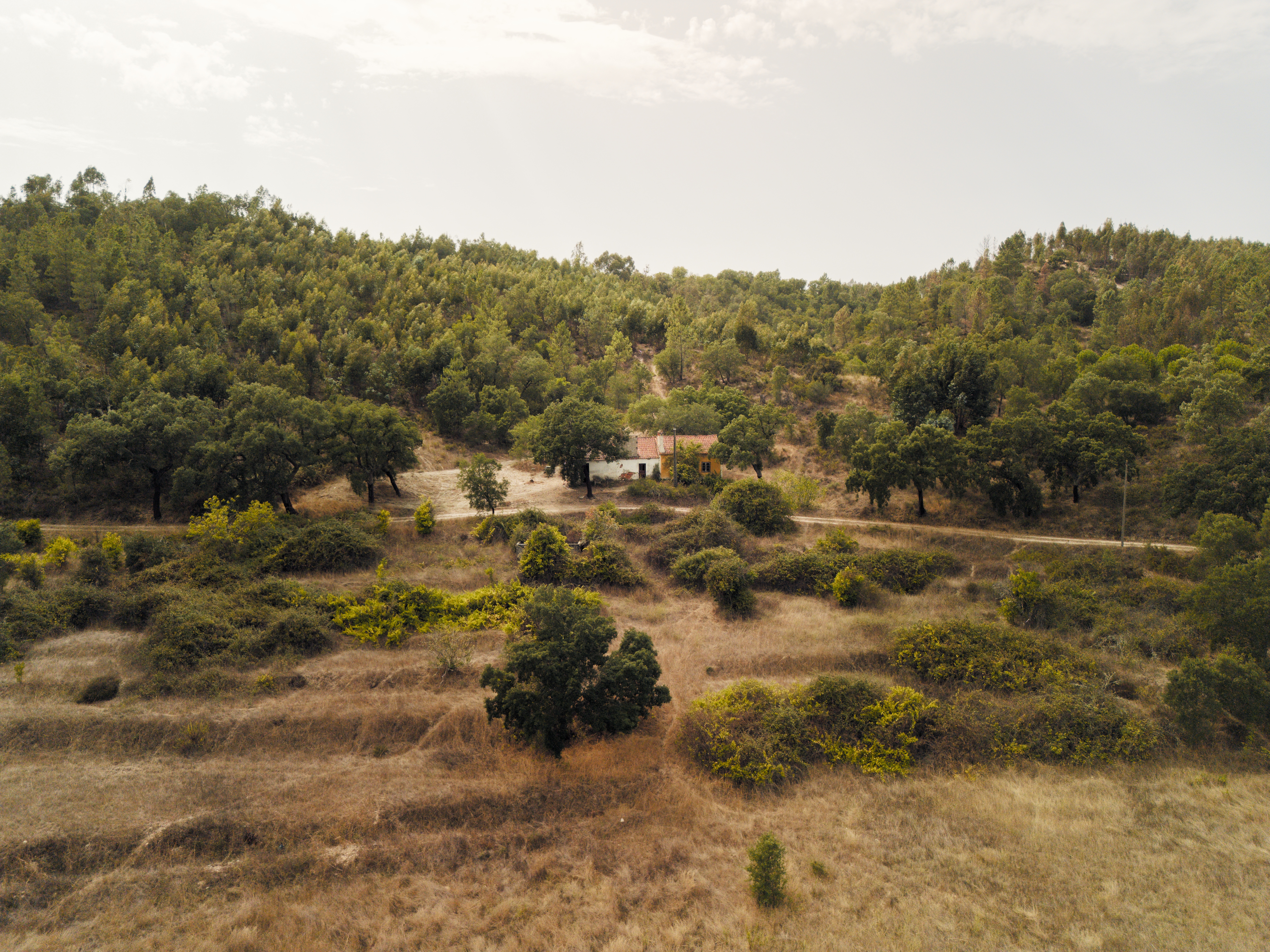
Tucked inside 12.5 hectares of pine forest sits an untouched, 100-year-old farmer’s cottage.
The moment an institutional investor walks onto a plot like this, their spreadsheets light up. The N2 is famous among cyclists, pilgrims, bikers, and road-trippers. The commercial pitch writes itself: subdivide the land, drop in ten prefabricated eco-pods, market it to slow travellers, and collect daily booking fees.
From an investor’s perspective, it makes total sense.
But as I walked through the trees, smelling the pine needles and hearing nothing but the wind, I saw something else entirely.
I saw a permanent sanctuary.
I imagined an individual or a couple taking this blank canvas and building a modern, light-filled cabin nestled amongst the forest. I pictured them keeping the ancient stone bones of the original farmer’s cottage, carefully restoring it step by step over the weekends, creating a home filled with quiet character. I pictured a life lived on one's own terms: connected to nature, completely grounded, yet just minutes away from historic towns and main roads.
Yes, maybe you let out a small guesthouse on the side to cover your local taxes. But the primary purpose of the land isn't commercial exploitation; it is human living.
The Hidden Obstacles (And How We Overcome Them Together)
Why don't more people buy land and restore homes in Portugal? Because the current system makes it needlessly intimidating for individual buyers.
If you are not an experienced developer, navigating the Portuguese countryside can feel like a maze:
Commercial Competition: Fund managers and commercial buyers move fast, cash-in-hand, often locking down prime land before local or private buyers even know it is listed.
Zoning & Regulatory Complexity: Understanding rural zoning laws, national ecological reserves (REN/RAN), ruin classifications, and build footprints requires local knowledge, clear guidance, and direct contacts with local municipal councils (Câmaras).
The "Turismo" Bias: Agents often push buyers into commercial tourism classifications because it is easier to pitch to investors, rather than doing the hard work of helping a residential buyer navigate private build permissions.
You do not need millions of Euros to secure land and build an extraordinary life in Portugal; you just need someone who knows how to navigate the terrain on your behalf.
Reclaiming the Dream: Your Blueprint for The People’s Portugal
If you have been holding back because the market feels too loud, too expensive, or too commercialised, here is what you need to remember:
Land with soul still exists: Across the Alentejo, Central Portugal, and along historic routes like the N2, extraordinary pockets of nature and traditional architecture are waiting for sensitive, creative hands.
You do not have to compete with funds: By identifying off-market opportunities, understanding true land values, and looking past bad marketing, you can secure properties that big developers overlook.
Small is beautiful: Building a home or restoring a ruin in phases allows you to maintain financial control, avoid over-leveraging, and create a space that genuinely reflects who you are.
Ready to Find Your Blank Canvas?
The real estate market does not belong to institutional funds and corporate tourism groups. It belongs to the people who are ready to put down roots, respect the land, and build something meaningful.
Whether you are looking for a 100-year-old cottage to restore, a parcel of forest for an architectural cabin, or a quiet homestead where you can live authentically, you do not have to navigate it alone.
Let’s bypass the commercial noise and find your sanctuary.
Get in touch with James Agutu & Kaya Team to discuss off-market land, restoration projects, and rural opportunities across Portugal.